

Great Books
Summary
Some deep-sea divers spend so much time in the ocean’s depths that they can’t tell which way is up. Psychologists call this condition deep rapture. The divers lose their sense of space and time and have extreme difficulty resurfacing. This also happens to avid readers when they are interrupted from a great book. They are likewise lost in the world of their book, momentarily disoriented when they resurface into the current reality. When was the last time you experienced deep rapture?
At some point many of us have stopped reading for pleasure, or we lost the pleasure in what we’re reading. This series is about our incomplete education, and the upcoming message is intended to rekindle our relationship with great books. Speaking of which… Is it any coincidence that the Revelation began with a single command – “Iqra”? Let that be our motto as we dive deep into the ocean of great books.
Jazakumullahu khairun. Wasalam.
Learning Objective
The audience will understand that a major part of loving the Qur’an comes from appreciating great books, and enjoying great books requires wide access, a supportive atmosphere, and time.
FM Academy
This khutbah is about books – they are perfect props. Props can be powerful anchors for key points. They provide instant engagement from visual learners and otherwise sleepy-heads around the room. Bring one of the books and hold it up as you discuss it. Give everyone a chance to see it, then put it away.
First Khutbah
Khutbah tul Haajah
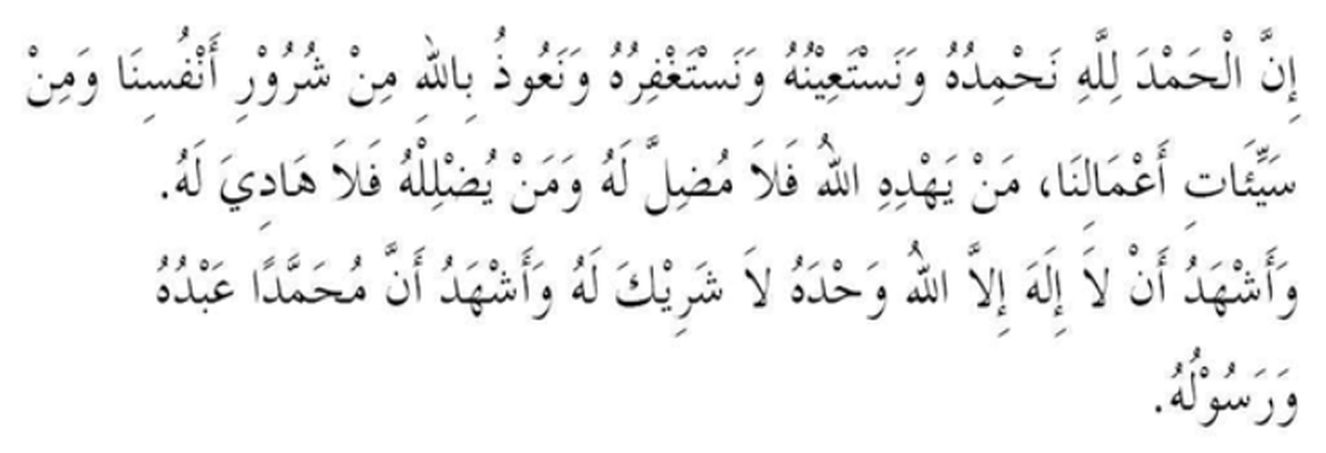
Innaal-hamdu Lillaahi nahmaduhu wa nasta’eenahu wa nastaghfiruhu
wa na’oodhu billaahi min shuroori anfusinaa wa min sayi’aati a’maalinaa
Man yahdih Illaahu falaa mudilla lahu wa man yudlil falaa haadiya lahu
Wa ashhadu an laa ilaaha ill-Allah wahdahu la sharika lahu
wa ashhadu anna Muhammadan ‘abduhu wa rasooluhu

Ya ayyuha allatheena amanoo ittaqoo Allaha waqooloo qawlan sadeedan
Yuslih Lakum A’malukum wa yaghfir lakum dhunubakum wa mayin yuti illaha wa rasulahu faqad faza fauzan adheema.
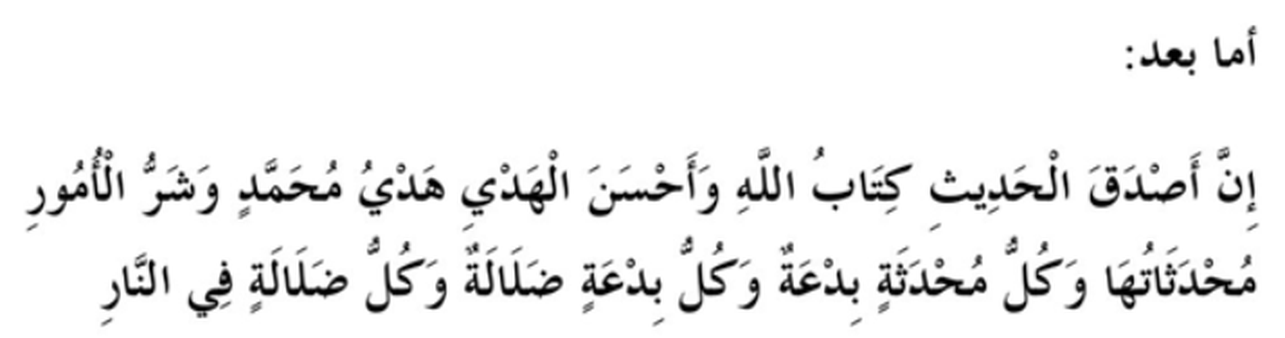
Amma ba’ad.
Fainna khairal hadeethi kitabullah, wa khairal hadi, hadi Muhammad (saw), wa sharrul umur muhdathatuha, wa kullu bida’atin dalaala, wa kullu dalalatin finnar
Ray Bradbury describes a grim vision of future America in his novel Fahrenheit 451—that being the supposed temperature at which books burn. It is a hedonistic, lawless, anti-intellectual place where firemen don’t put out fires – rather, they start them to destroy books. Anyone possessing a book is killed or put into a mental ward. The main character, Guy Montag, is one of these Firemen, enforcing the laws against books by burning them. His suicidal wife begs him to work harder so they can buy a fourth TV. Bradbury describes the society as being glued to their TV shows and large screens. (This book was published in 1953.) In the course of his job, Montag reads something out of a book and has a crisis of faith. His Captain discovers that Montag has stolen a small collection of books for himself, and so he orders him to burn his own house down—and he does. But then Montag loses it and kills his Captain. He flees the city and meets a group of scholars who have memorized books.
I’m not going to give away the ending, but if you get this far, trust me, you will finish it.
Fahrenheit 451 on Amazon — http://www.amazon.com/Fahrenheit-451-Ray-Bradbury/dp/1451673310
When Steve Jobs was asked about Amazon’s e-Reader, he said “It doesn’t matter how good or bad the product is, the fact is that people don’t read anymore. Forty percent of the people in the U.S. read one book or less last year. The whole conception is flawed at the top because people don’t read anymore.”
More than a decade ago, Kevin Kelly, a co-founder of Wired magazine, wrote a book on the death of reading and made it available for free on his website. You gotta appreciate the irony of a book about how no one reads anymore. Publishers know this all too well: since 1990, newspaper circulation has significantly declined; consumer book purchasing is at a 20-year low.
In 2007, the National Endowment of the Arts (NEA) said that more than half of U.S. adults will not pick up a single book this year. That NEA Report called “To Read or Not to Read” shows a correlation between the decline of reading and decline in exercise, sports activity, visiting museums, volunteering, and even voting. [1] More recent surveys correlate book deficiency with drug use, divorce, and teen pregnancy.[2]
The good news is that reading is alive and blossoming in ways we never imagined. Businesses are built on the written word, and text is the primary format of the internet. By 2008, more than a trillion pages existed on the World Wide Web, and the total grows by several billion per day. I was recently overseas and the only books I took were on a Kindle eReader. It was delightfully convenient to carry Switch by Chip and Dan Heath in my jacket pocket—an otherwise 400-page hardback.
The invention of the Gutenberg printing press in 1440 was a game-changer, considered [3] the most influential event of the second millennium. Book-making went from laborious hand-copying to printing 3,600 pages per day. It is said that the printing revolution ushered the scientific revolution, the Industrial Revolution, and modern capitalism. Literacy is critical to the democratization of ideas; American identity and prosperity grew from and depends on a culture of reading and writing.
What is the significance of Freedom of the Press when no one is reading? Even Allah categorizes people based on their adherence to a Book. Look at the Ahl-ul Kitaab.
As Muslims, we know that the first command was to Read. [4] Think about that. It was not to make wudu. It was not to pray. It was not about halal meat. It was not about local vs. global moon sighting. It was not to finish your Bachelor’s degree. Then, what was the number 2 command regarding the Qur’an? Fast? Sadaqa? To reinforce the first command, the second command was to recite the Qur’an as it was revealed [5].
The Book or the Movie?
When I mention a great book, I hear many people say that they’ll just wait for the movie. J.W. Eagan said, “Never judge a book by its movie.” With maybe only one exception [6], I always find that the book is richer than any movie adaptation. If you think that the Shawshank Redemption was a good movie, it pales next to Stephen King’s short story, Rita Hayworth and the Shawshank Redemption. Malcolm X writes about the first time he heard the Qur’an while incarcerated. Alex Haley’s Autobiography of Malcolm X is brilliant, but Spike Lee’s commentary on adapting the book to the script is even more engaging.
MRIs show that while we watch TV, only a small part of our brain is engaged; but when we read, large areas of both hemispheres and deep layers are active. In addition to the depth and breadth of the ideas in books, reading builds vocabulary, improves concentration and memory, refines reasoning skills, and builds self-esteem.
Reading online is not the same. The web is for scanning, not deep reading. Why do you think that the single most used application is called a browser? The average user spends less than two minutes in a blog. Books make us analytical and contemplative, but screen-reading provokes action. [7] It creates associations which we rapidly chase, usually just a click away.
There is something else about reading a book. I submit to you that time-travel is possible. Within just a few pages of the Count of Monte Cristo, I am instantly transported into the world of Edmund Dantes: early 17th century France. It doesn’t even feel like I’m reading, but rather like seeing a 3D movie, where I feel, hear, taste, and smell the story. I am lost to the outside world. I don’t notice turning the page, or finishing a chapter. The unabridged book is 1,300 pages, yet it feels like a short story because you get into the deep rapture zone. As Anna Quindlen says, “Books are the plane, and the train, and the road. They are the destination, and the journey. They are home.”
Imagine your own personal department store. It has a huge clothing selection where you could pick out an outfit, try it on to make sure it fits, and then take it home for free. Then a few weeks later, after you’ve worn it, you bring it back and take something else. You can take 15 outfits at a time if you want. That is what a public library is like, except books are so much better than clothes. My library card was my first ID. It was the reason that I got a wallet. Let me give you an insider’s tip to life: If you have a good mechanic, a tailor, a friendly janitor, and a knowledgeable librarian, you will live a much sweeter life. Our librarian holds books for me and makes authentic recommendations. There is a website called LibraryThing.com, where thousands of librarians and readers have registered and make book recommendations. I was skimming through their list, saw, then read, Still Alice by Lisa Genova. It’s about a professor who is diagnosed with Alzheimer’s. Read this book. It is 10 out of 10.
We used to have a flea market close to our home, so on weekends I would go to the book sellers there. One guy sold paperback books by the pound, so I would get a dozen novels for $5. Even if only one of those ended up being a great novel, it was still a much better and cheaper entertainment option to watching a movie or getting some fast-food. I picked up all the English classics, but a stand-out book was Into Thin Air by John Krakauer. As of last week, it had more than 1,000 five-star reviews on Amazon.com (better than any movie), and you can get a used paperback copy for $0.25.
My first challenge to you is teach your children to love great books. If you want your children to love the Qur’an, teach them to love reading.
Don’t expect their schools to do it. Schools will drown them with drill-and-kill exercises. One student told me, “I think my worst nightmare was last year, when we all had to read the same book, and do worksheets, and make journals after every chapter.” [8]
There is no homework that is more important than reading. [9] The top 5 percent of U.S. students read 144 times more than the bottom 5 percent. No single activity has a more positive effect on student’s comprehension, vocabulary, spelling, grammar, writing, and overall academic achievement than voluntary reading.
Read every night: For half an hour, the entire family reads books of their own choice—no exceptions, no digital technologies, no matter what. Trust me, when everyone has a great book, your challenge is going to be stopping after 30 minutes.
Give children encouragement, time to read, lots of books, silence, book discussions, comfortable cushions, and reading peers. I would love to stop here and talk about the importance of a home library, as a best practice for the Islamic household.
If you do this, you will get a generation of skilled, passionate, critical, and lifelong readers. They will love and respect great books because they have studied them, not because their parents or teachers told them to.
Muslim parents tend to get especially offended when their children want to read books like Harry Potter or the Twilight series (about vampires). My advice is always to choose your battles. Instead of getting upset because your children want to read, why not read the same book yourself, and you can have a relationship-building conversation about the book. (FYI, there are more adult readers and fans of Harry Potter than youth fans. Who knows, you might actually enjoy it!)
Great Books
So what makes a book great? [10]
A great book stays with you long after you’ve closed it and put it away. The Creator says, “We have made the Qur’an easy to remember.” [al-Qamar:17]. But there is something about the Qur’an – millions of people have memorized all of it. How many other great books are actively committed to heart? I really like a tiny book by Shel Silverstein called the Giving Tree. It has only 500 words, and it rhymes, but I haven’t memorized it. Even the Pope hasn’t memorized the Bible. But a nine-year-old kid at Masjid Hamza can memorize these 500 pages. If that is not a quality of a great book, then I don’t know what is.
A great book is composed of great parts. I have read the Cloudspotter’s Guide just once, but I’ve been through the section on low clouds a dozen times. I keep mixing up the cumulonimbus and stratocumulus. Likewise, we read certain chapters from the Qur’an and love them more than others. What is your favorite surah and why? Normally, we get tired of reading the same thing again and again. Yet here is a unique quality about the Qur’an: we can read the same chapters again and again and again, and can live a lifetime without getting tired of them.
A great book is clear and to the point. I hate seeing spelling errors and contradictions in books. Herein, the Creator puts forth a challenge: If you find a single mistake, you can reject the entire book. A great book is easy to understand. (I feel like I need an advanced degree to make it through A Brief History of Time by Stephen Hawking.) Interestingly, you can read the Qur’an even if you don’t know Arabic. You can read the Qur’an even if you don’t know how to read. I performed Hajj with a man who had memorized large portions of the Qur’an while in prison, and he was completely illiterate in both English and Arabic.
A great book is arresting. It stops you in your tracks. I started and finished Johnny Got His Gun at a Books-a-Million bookstore. I never made it to the checkout line. I dare you to read it without crying. Dalton Trumbo was kicked out to the country for writing that book. Some people have accepted Islam just from having read parts of the Qur’an. When I play the recitations, people stop and listen. They ask me who or what that is. There are some reciters who are so good, I can’t listen to them standing up – they make my knees weak. I know that when Mishary Rashid al-Ifasy begins Surah as-Sajdah, I can’t drive my car at the same time.
A great book gives more than it takes. It took me a few weeks to read A People’s History of the United States. I feel like Howard Zinn has opened up a new hemisphere in my head, because it has transformed me from a science and math geek to a history buff.
The Quran
It behooves us to discuss great books by highlighting the Qur’an [11]. But it’s not like an ordinary great book – the style, manner, subject, references; in fact, it doesn’t even seem like a book about religion as we know it. To study it, we must re-educate ourselves from our preconceived notions of what a book is.
One of the most prestigious management consulting companies only hired one person in 2006. He was a young Harvard grad whose only special talent was an ability to X-ray books. He could quickly see books’ skeletons through all their flesh and clothing.
Some people look at the Qur’an and say that it is incongruous in style, that there are gaps in the continuity of subjects, and that its topics are not interconnected. When we X-ray the Qur’an, its subject is man, its theme is exposing the reality of life, and the aim is inviting man to the right way. Look at its X-ray, and then all the topics make sense and the gaps are relevant – that’s in English. In Arabic, its style is magnanimous.
The Qur’an takes great books to the next level – it carries a reward for its reading. Abdullah ibn Masood said that the Prophet (S) said, “Whoever recites a word from the Book of Allah will receive 10 good deeds. And Alif, Laam, Meem is not a word – rather Alif is word, Laam is a word, and Meem is a word.” [12] As far as rewards are concerned, the Qur’an even intercedes for you in the Day of Judgment [13]. There are specific rewards for reading specific verses. It is said about Surah al-Mulk, it will not stop interceding for the one who has memorized it until that person is dragged out of the Hellfire and placed in Paradise. [14]
Unlike any other great book, reading the Qur’an is a cure. Emotionally, it brings tranquility and peace [15]. It lays the foundation for true happiness. Physically, it is a cure for the body. [16] There is shafaa (healing) from the recitation of the Qur’an. More than that, if you’ve got emotional and physical problems, it is used to expel jinn, too.
As if the above was not enough, the Qur’an is something much more that all that. The people who lived at the time of the Prophets saw miracles all around them. The Companions heard the rocks and trees making Dhikr when the Prophet (S) walked by. They saw these things with their eyes. However, we have to believe without seeing anything. Instead, we have the Qur’an, a living miracle. Not only is it scientifically ahead of its time, but it has a seal of protection: It was the most powerful words during the time when the Arabs had the greatest poetry, and 1,400 years later, it is still the highest Arabic literature in the world.
A cool ou koule hadha, astaghfirullahe wallkum, astaghfiruhu innahu wal-Ghafur rur-Raheem.
[sit]
Second Khutbah
Alhamdolillah, summa alhamdolillah. Amma baadh.
Challenges
There is a book called How to Read a Book by Adler and Van Doren, which described a process called active reading. It requires us to engage the book. Give it our focus, and ask it questions. I challenge you to actively read your Qur’an, which means that you write notes in the margins, underline and write definitions of words, circle key phrases, even fold pages. To many people, this is complete blasphemy. They respect the book so much that they want to keep it wrapped up on the highest shelf in the house. I say that it is an instructional text to be used, studied, and discussed.
My favorite room of any home is its library. I learned to respect books by spending time in the library. If you want to know about the completeness of the Islamic deen, look up its library sciences. Islam has guidelines for where and how to classify books (it came long before the Dewy Decimal System). My bigger challenge to you is to create a space where you can give your children options in reading. Then commit to dedicated reading time in your home every day. Set aside at least 15 minutes per day to reading. Erasmus said, “When I get a little money, I buy books; if any is left, I buy food and clothes.”
If you really want to get the most out of a great book, here are 3 keys.
Key #1. Study the parts and supporting literature. These days, it seems like everything cool must be in 3D. If you want the Qur’an in 3D, then read the tafseer, then reasons for revelation, then the Seerah: 3D Qur’an on IMAX for free.
Key #2. Practice it. The Arnold Schwarzenegger Encyclopedia of Bodybuilding is the reference for exercise, fitness, and the fundamentals of getting strong. I’ve owned that book for 15 years. Clearly, not utilized. On the other hand, I read Bill Bryson’s A Walk in the Woods and laughed so much that I actually hiked a few major sections of the Appalachian Trail. The Qur’an was sent to inspire us. It is easy to follow and leads to the greatest incentive imaginable or better. If you want to get the most out of the Qur’an, take its commands and follow them.
Key #3. Try teaching it. I procrastinate, so I found the best-reviewed book called Eat That Frog by Brain Tracey and made a khutbah out of it. Why? So that I will know it better. The Prophet (S) said, “The best of you are those who learn the Qur’an and teach it.”
Sadly, in almost every masjid there are more Qur’ans than there are people. Let’s be a community that appreciates great books because we’ve read them. If nothing else has stirred you today, remember the very first word that was revealed was not to pray. It was not to be grateful or to earn money then donate. The first command was to Read. Your Creator’s very first guidance was to read.
Iqra’ bismi Rabbi kal-Ladhī khalaq.
Read in the Name of your Lord who created you, and the substances that you are made out of. [96:1]
Innal-lahu wa Malaaikatuhu yassaloona alan-Nabi
Yaa aiyuhal latheena aamanoo, salloo alaihy, wa sallimou tasleema
Allahumma Salli ‘Ala Muhammad, wa ‘Ala alee Muhammad,
Kama sallaita ‘Ala Ibrahima wa ‘ala alee Ibrahim
Fil ‘alameena innaka hamidun Majeed.
Oh Allah, if we leave here with only one message today, let it be that we must spend more time with the Qur’an. Help us to read it, recite it, study it, teach it, and live it.
Oh Allah, you’ve given us this noble ability to read. Help us to be grateful to You by reading books that will bring us closer to You.
Oh Allah, we are drowning in our daily affairs and we feel like we don’t have time to read. Help us make it a priority, and help us find pleasure in it so that we can model that action for the youth.
Oh Allah, make us a community that reads. Help us instill a love for reading in our children. Let there arise from us generations that love to read.
Ya Hayy Ya Qayyum, we all wish to be happy so help us understand that only in remembering you do our hearts find rest and contentment and happiness. Ya Rub.
Ya Rub bil-Alimeen, purify our hearts and our souls, and forgive us for our shortcomings.
Ya Rahmaanu Ya Raheem, from now on let us do deeds of the people of Paradise.
Ya Ar-Hammar raa Himeen, keep our families and all the Muslims away from the Hellfire.
Ya Ghafoor Ya Shakoor, help us to be grateful to you and to our parents.
Ya Razzak Ya Wadud, give us the means to make our parents happy.
Ya Malik Ya Salaam, make the trials of our parents easier in their old age.
Ya Dhul-Jalal wal-Ikraam, give us Jannah through our parents.
Ya Aqeemas salati yarhumukumullah.
Post-khutbah Announcement:
I want to bring back an old tradition called Show-&-Tell. Your assignment is to bring a book that rocked your world. Inshallah, after the maghrib prayer, we can chat/discuss it.
15 Great Books:
- The Qur’an
- Fahrenheit 451, by Ray Bradbury
- Switch, by Chip & Dan Heath
- By Any Means Necessary, by Spike Lee
- Rita Hayworth and the Shawshank Redemption, by Stephen King
- The Count of Monte Cristo, Alexander Dumas
- Still Alice, by Lisa Genova
- Into Thin Air, by John Krakauer
- The Giving Tree, by Shel Silverstein
- The Cloudspotters Guide, by Gavin Pretor-Pinney
- Johnny Got His Gun, by Dalton Trumbo
- A People’s History of the United States, by Howard Zinn
- How to Read a Book, by Mortimer Adler & Charles Van Duren
- Eat that Frog, by Brian Tracey
- A Walk in the Woods, by Bill Bryson
For more great books, see LibraryThing.com or Goodreads.com
Leave a Comment
Two Ways to Discuss
Open Discussion
…or contribute anonymously
-
07/24/2012
Joyce Carol Oates
“Reading is the sole means by which we slip, involuntarily, often helplessly, into another’s skin, another’s voice, another’s soul.”
-
07/25/2012
Samuel Johnson
“I cannot see that lectures can do so much good as reading the books from which the lectures are taken.”
-
08/08/2012
FYI
Books don’t need batteries.
-
08/16/2012
BookRenter.com
a website that allows you to rent textbooks for a fraction of the cost. And when your classes are done, you just send them back for free. You can sign-up for this service 125 days at a time. Less money spent on books means more money for…
-
08/16/2012
Malcolm X
“My alma mater was books, a good library…. I could spend the rest of my life reading, just satisfying my curiosity.”
-
09/19/2012
Bridging Cultures Bookshelf: Muslim Journeys
The Muslim Journeys Bookshelf is a collection of 25 books selected to help public audiences in the United States become more familiar with the people, places, history, faith and cultures of Muslims around the world, including those within the U.S. The Bookshelf will be awarded to 1,000 libraries across the country in December 2012, for use in presenting public programs in 2013. For more details, please go to: http://www.ala.org/programming/muslimjourneys
-
10/03/2012
Robert Pattinson
“If you find a girl who reads, keep her close. When you find her up at 2 AM clutching a book to her chest and weeping, make her a cup of tea and hold her. You may lose her for a couple of hours but she will always come back to you. She’ll talk as if the characters in the book are real, because for a while, they always are. Date a girl who reads because you deserve it. You deserve a girl who can give you the most colorful life imaginable.”
-
12/11/2012
Hamza Yusuf
“Language is the crowning achievement of human beings, and that is something Muslims have always known and revered. We are a literate people whose miracle is a Book from an unlettered man, peace and blessings be upon him, who was the most articulate and eloquent human being who ever lived.”
-
01/10/2013
Cheating
I love my wife, but I am married to books and film. Sometimes, when I am with her without a book closeby, then I feel like I am cheating.
-
07/15/2013
Groucho Marx
“Outside of a dog, a book is man’s best friend. Inside of a dog it’s too dark to read.”
-
08/12/2013
What do rich people do every day that the poor don’t do?
Tom Corley, on his website RichHabits.net, outlines a few of the differences between the habits of the rich and the poor:
- 63% of wealthy people listen to audio books during commute to work vs. 5% for poor people.
- 63% of wealthy parents make their children read 2 or more non-fiction books a month vs. 3% for poor.
- 88% of wealthy people read 30 minutes or more each day for education or career reasons vs 2% for poor.
- 86% of wealthy people love to read vs. 26% for poor. -
08/24/2013
www.TED.com
Lisa Bu – How Books can Open Your Mind
-
07/29/2014
Emilia Clarke
My father always said, “Never trust anyone whose TV is bigger than their bookshelf.”
-
09/08/2014
how to read
If you think reading is boring, you’re doing it wrong.
-
10/04/2014
http://www.ryanholiday.net/how-to-keep-a-library-of-physical-books/
Justifying my obnoxious book collection
-
10/11/2014
Wyh Yuo Sholud Raed Mroe…
We aren’t going to stop using these apps—they’re fun—but we need to achieve balance. There are numerous benefits from reading but one of the most important is it teaches us focus.
https://medium.com/@krdounglomchan/focus-d00406faacbd -
02/07/2015